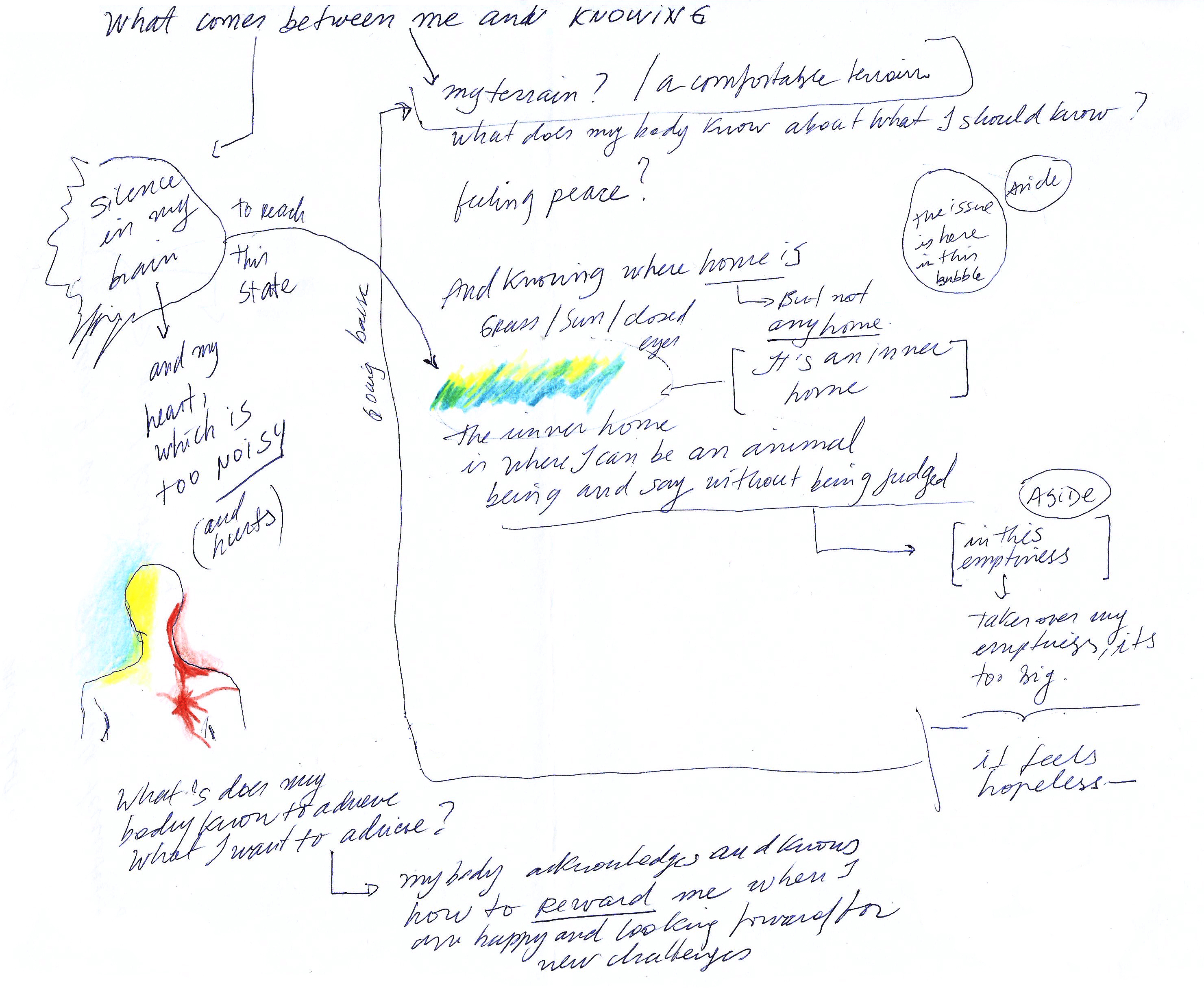
“Experience is a myriad richness. We think more than we can say. We feel more than we can think. We live more than we can feel… And there is much more still.”
Eugene Gendlin
Join us for CHI2026 in Barcelona, Spain
We make sense of the world around us through our bodies; however, this somatic dimension of meaning-making is often overlooked in the development of AI systems. Through poetic engagements with AI and our bodily ways of connecting with self-knowledge, this long workshop invites participants to critically explore the frictions and opportunities that emerge when bridging seemingly contrasting practices, such as soma design and the design of AI systems.
Call for Expressions of Interest (EoI)
We welcome expressions of interest (EoI) that explore this topic from a variety of perspectives, such as (but not limited to):(1) Theoretical approaches bridging AI and the body, (2) creative practices that employ AI and embodiment, (3) positions that contest the need for AI in favour of other body-centric practices, etc. EoIs can take various formats, including position papers, pictorials (2-4 pages), video prototypes and so on.
Submissions should be sent to claudia.nunez-pacheco[at]mau.se, and those selected will be made available on our website https://claudianunezpacheco.com/soma-ai-CHI2026 upon the participant’s agreement. We will select participants who align with the body-centric AI aims and whose submissions have the potential to contribute to the discussions. At least one author of each accepted submission must attend the conference. We aim to gather around 20 participants from diverse areas, including (but not limited to) AI for wellbeing, artistic research, embodied interaction, digital humanities, RtD, soma design, and more-than-human bodies.
Important Dates
Submission of expressions of interest: Thursday, February 12, 2026 / Friday, February 20, 2026
Notification of acceptance: Tuesday, February 24, 2026
Early bird registration deadline: Wednesday, March 4, 2026
CHI 2026 Barcelona: 13–17 April, 2026
Workshop time and location:
Tuesday, April 14, 2026 (14:15–18:00 CEST), Centre de Convencions Internacional de Barcelona or CCIB (Barcelona, Spain) P1, Room 119
Organisers

Claudia Núñez-Pacheco is a Senior Lecturer at the Department of Computer Science and Media Technology at Malmö University in Sweden. Her research investigates how to design from self to others, including how bodily ways of knowing are utilised as materials for aesthetic experiences in design. She employs introspective and somatic practices to explore aesthetic and generative qualities in our interactions with technology.

Pedro Sanches is a Senior Lecturer at the Department of Informatics at Umeå University in Sweden. His research draws on feminist epistemologies to design biodata-driven and AI-based technologies for health and wellbeing, as well as performing arts. He applies speculative and somaesthetic design tactics to consider situated lived experiences when crafting with data and AI as design materials.

Jesse Josua Benjamin is an Assistant Professor at Eindhoven University of Technology. His work combines philosophy of technology and design research and practice, and centres on the underexplored aesthetic potentials of concrete technical attributes of emerging technologies, and the resultant consequences for design research and practice. Having argued for understanding machine learning uncertainty as a design material, his current research interrogates the solidifying design conventions around AI technologies.

Iohanna Nicenboim is a postdoctoral researcher at TU Delft, where her work focuses on materialising AI through design. Originally from the Global South, she brings a critical perspective to how AI systems are developed and deployed, emphasising the need for non-extractive, regenerative, and situated approaches. She completed her PhD as a Microsoft Research Fellow, developing a more-than-human design approach to AI that combines posthuman theory with research-through-design practice. She co-edited a special issue of the HCI Journal on the More-than-Human Turn in Design, has chaired two DRS tracks on More-than-Human Design in Practice, and is a chair of the Pictorials track at DIS (2023 and 2026).

Mirjana Prpa is an Assistant Teaching Professor at Northeastern University. Her research interests include leveraging micro-phenomenology in HCI for understanding the complexity of user experiences and extending it to unfold experiences arising from human-AI persona interactions, spanning from LLM use for persona creation to LLM-based agents in social VR.
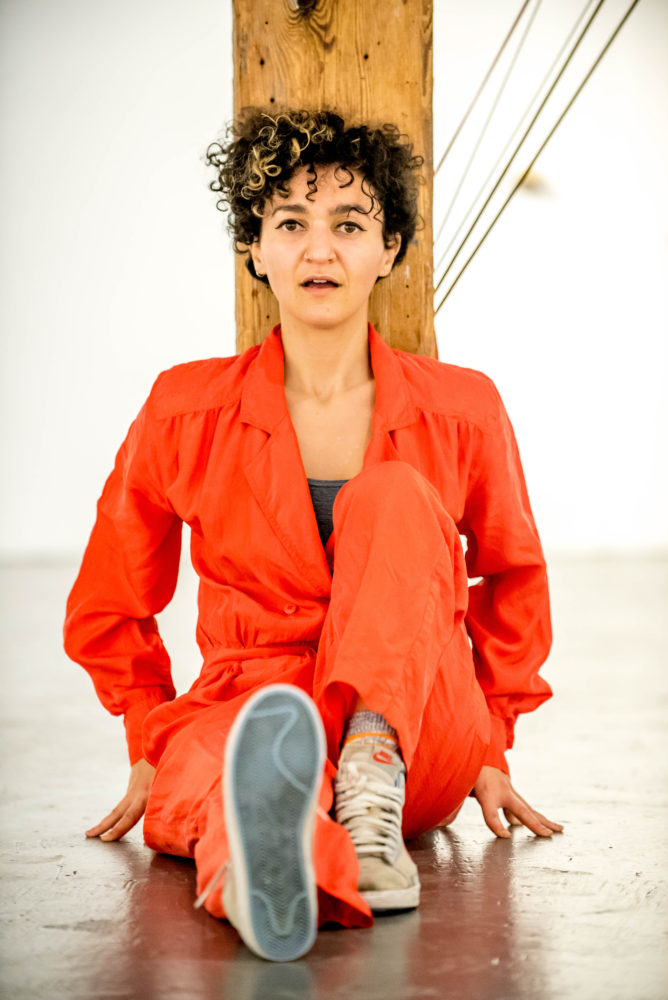
Sarah Fdili Alaoui is a Reader at the Creative Computing Institute at the University of the Arts London in interaction design, human-computer Interaction, and dance and technologies. She is a choreographer, a dancer, and a Laban Movement Analyst. Her research investigates the theory, practice, and methods of intersecting technological design with dance-making. Her research methods include artistic research, research-through-design, (auto-)ethnography, phenomenology and action research. She co-founded and organised the MOCO conference.

Michelle Rennerová is an art curator, artist, and PhD student from the University Pompeu-Fabra in Barcelona. In her artistic practice, she explores the intersection of technology and human experience, focusing on social engagement and well-being. Her research focuses on analysing the integration of AI-driven biometric technologies into interactive art installations and their influence on human agency, autonomy, and self-determination.
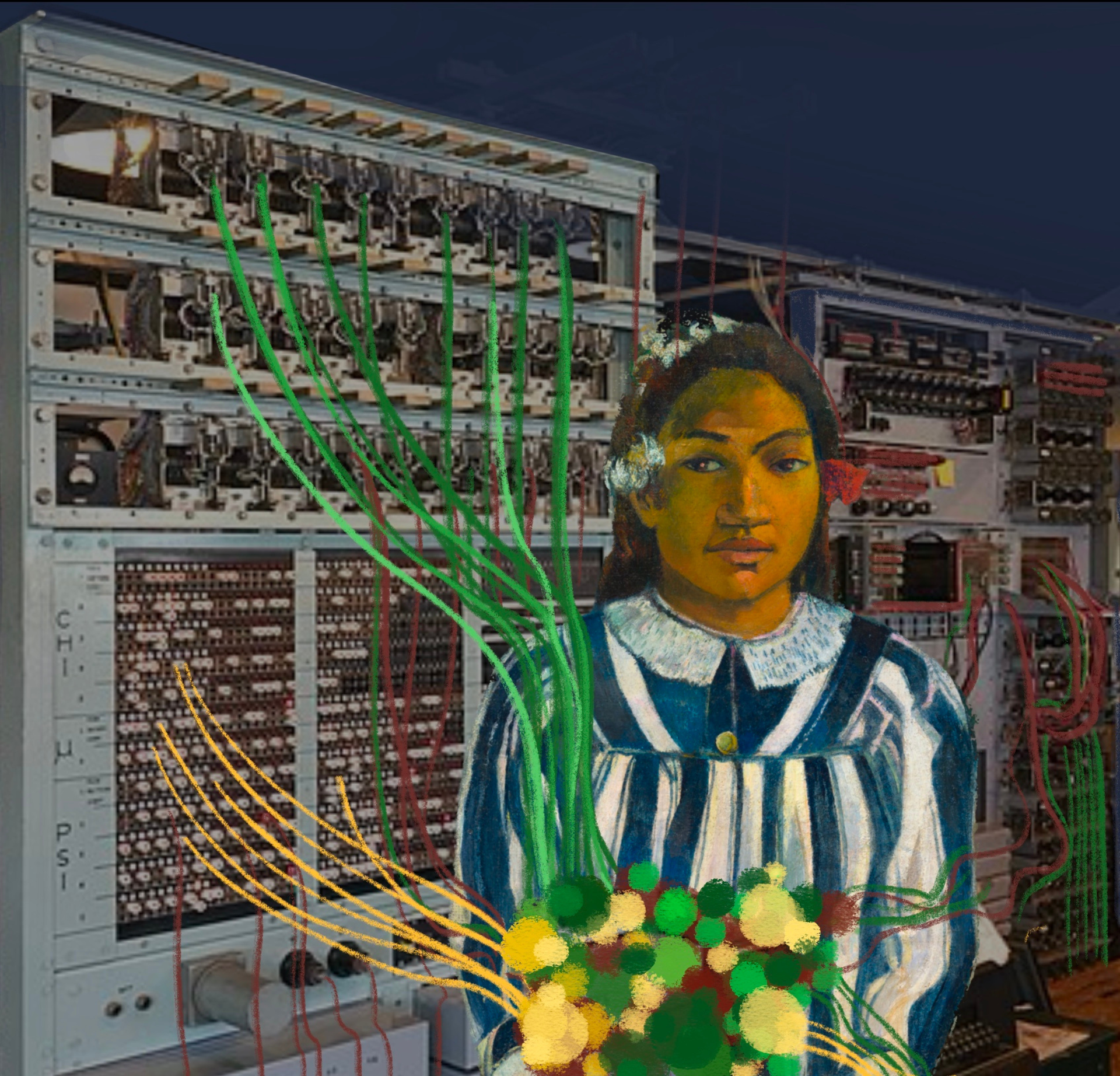
Source image (top): Hanna Barakat & Cambridge Diversity Fundhttps://betterimagesofai.org / https://creativecommons.org/licenses/by/4.0/

